Returning Home and Belonging
East of the MountainsReturning Home and Belonging is the final movement of Ben Givens’s journey away from a planned death and back toward a life still connected to other people. Home is at once a destination across the mountains, a landscape changed since childhood, and a collection of ordinary obligations and attachments waiting for him. The return does not erase illness, grief, or damage; it makes room for Ben Givens to resume living among them.
Two Meanings of Home
The idea of home first enters this closing journey through Bea Harden, who says that the only thing she wants is to go home. Her fingers knead against swollen, misshapen knuckles as she asks where home is. Ben Givens answers that he lives on the other side of the mountains. Bea calls him a transplant, and he accepts the description. The exchange makes home less a simple matter of birthplace than a place to which a person belongs, or hopes to return. Both travelers are marked by distance from home, though their destinations and circumstances differ.
For Ben Givens, the need to get back is concrete as well as emotional: he tells Bea that he has no other way home. She takes charge of the practical problem, asks for his keys, and promises to return his truck to the U-Save in town. Then she offers to drive him across. Her help transforms home from an unreachable direction into a journey that can actually be made. The return begins not with Ben Givens travelling alone, but with another person taking responsibility for getting him there.
Crossing Back
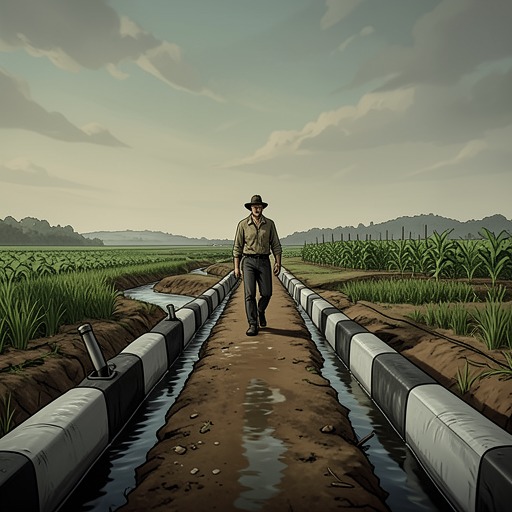
The route gives the return a visible geography. Bea drives the El Dorado upriver; they cross the Columbia River at East Wenatchee, pass Rock Island, and enter the country where Ben Givens lived as a boy. Apple trucks travel in both directions, and pickers are still gathering the last fruit. These are not a preserved childhood scene: the orchards remain recognizable, but they belong to a working landscape and a present season. When Bea asks where his former place stood, Ben Givens points it out as they reach it.
The old orchard runs down toward the river, with tan hills rising to the west, while a newer house stands behind willows that have grown over the years. Bea pauses at the roadside to take in the view and the poplars. Ben Givens answers that things have changed, and the admission keeps the return from becoming a fantasy of recovering the past intact. He can recognize the country as his own while acknowledging that time has altered it. Homecoming means entering a changed place and accepting the change, not finding the childhood world waiting unchanged.
The Road Through the Mountains
The drive continues through distinct country before reaching the mountain crest. Bea and Ben Givens pass from sage and canyons into evergreen forest; the mountains ahead are snow-covered, and the old clear-cuts carry red patches of Cascade blueberries among the heathers. At Snoqualmie Pass they stop at the Traveler's Rest. Bea goes in for coffee and a donut and offers to bring him something, but Ben Givens has no appetite. He thanks her for her care and for taking him home. Bea describes the trip as useful to him and interesting to her, a modest answer that makes her generosity neither grand nor transactional.
While Bea is inside, Ben Givens checks on Rex, who is travelling in the back. He rolls down the window with effort because he wants to smell the mountains. The pass brings back his memory of walking the Cascade crest from Windy Gap, and of a promise to climb Silver Peak with Chris; now he knows he will have to explain that the climb cannot happen as planned. The recollection places the return among continuing relationships and unfinished conversations. Home is not simply where the journey ends: it is also where Ben Givens must face what he can no longer do and speak to those who expected to share it with him.
The Familiar House
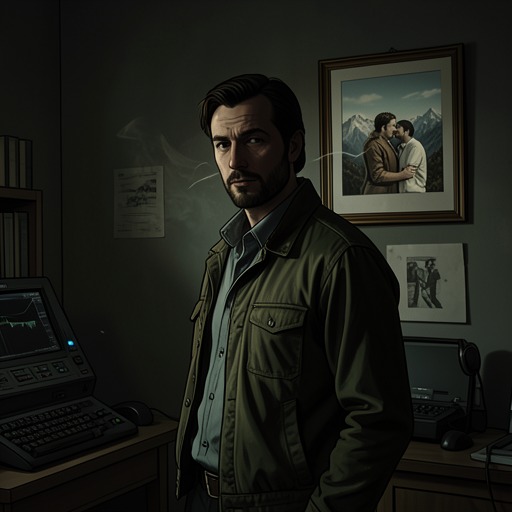
By the time Bea drives west through gentle rain, the mountains have given way to the road home. There, the house is as Ben Givens left it, and nothing has gone wrong in his absence. His neighbor has taken out the garbage and attended to the newspapers and mail. The VCR has recorded Great Railway Journeys; the bird plucker remains on the kitchen table, and the recipe for quail on toast still projects from the recipe box. Four messages wait on the answering machine: a nurse for Bill Ward confirming an appointment, another doctor Ben Givens sometimes hikes with, the auto shop that towed his Scout, and his car insurance company. Their ordinary mixture of care, work, and unfinished business makes home tangible. He has calls to return, but not yet.
He feeds Rex, then slumps at the kitchen table while the dog eats. Through the window he sees the kennel and the Summer Damasks Rachel Givens planted beside the garbage-can pad and the neighbor's wall. Only a few leaves remain, and the unpicked blossoms have become hips; the plants are now tall and profuse. Their growth registers time passing in the very place that has seemed unchanged. Ben Givens turns up the heat and goes to the bedroom, where a copy of Scientific American lies open beside the bed. His dusty hunting clothes smell of sage, and bloodstains and feathers remain on them. The return brings him back not to a life scrubbed clean of the journey, but to a familiar room with the journey still clinging to him.
A Return Into Relationship
Rex limps into the bedroom, looks at Ben Givens, and settles on the throw rug beside the bed. Ben Givens rests a hand on the dog’s flank and tells him, "I guess you can stay." The small permission has weight after the distance travelled: the injured companion is admitted into the resting place, and Ben Givens is no longer treating the future as already closed. The house’s ordinary intimacy is restored through touch and shelter, not through a declaration that every danger has passed.
After a while, Ben Givens picks up the telephone and calls his daughter. Renee Givens-Kane answers with her name; he replies that it is him and that he is home. The last statement is both report and renewed contact. It confirms his physical arrival, but its importance lies in his willingness to make himself present to his daughter again. Returning Home and Belonging thus ends not in a cure or a return to an unchanged past, but in a house, a dog beside the bed, and a call that opens the next human connection.